

THERMAL MODE ●
KITEYE640 · IN SERIAL PRODUCTION · TRL 8
KITOPTICS · LWIR THERMAL CORE · NDAA-COMPLIANT
KitEye640
A Core, not a “Black Box”. KitEye640 is an open, NDAA-compliant premium quality thermal core, built for engineering teams developing advanced computer vision and AI-enabled defense systems. High sensitivity, stable latency and full 14-bit output provide reliable data for detection, tracking and analytics, while operational control and task-specific ISP tuning allow the core to adapt to the platform, environment and mission — not the other way around.
NDAA-COMPLIANT
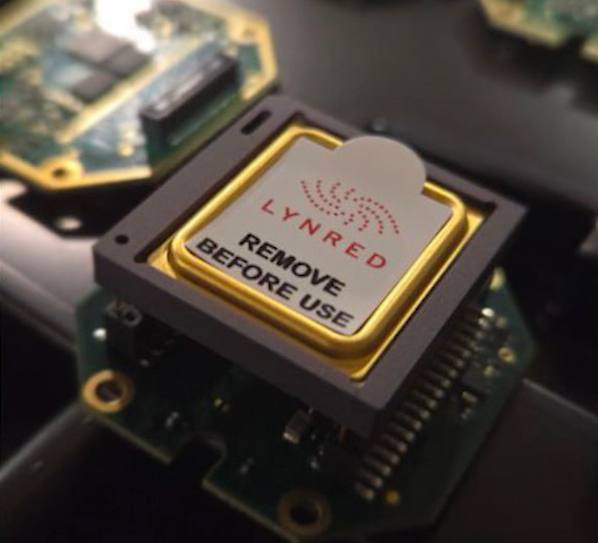
LYNRED PICO640S+
MADE IN UKRAINE
02 · KEY FEATURES
Features that define KitEye640 LWIR thermal core

01 / 05
THERMAL SENSITIVITY AT SPEED
KitEye640 combines high thermal sensitivity of 16–35 mK sNETD with a frame rate of up to 60 fps. A low sNETD means the camera can distinguish extremely small temperature differences — approximately 0.016–0.035°C, depending on the lens and configuration. This enables the detection of low-contrast targets even when their temperature is close to the background, while the high frame rate ensures smooth motion capture and reliable tracking of fast-moving objects.
TTX · THE NUMBERS
THERMAL SENSITIVITY · sNETD*
16–35 mK
FULL-FRAME SPEED
up to 60 fps
RESOLUTION
640×480 · 17 µm
Subtle thermal differences remain visible; responsive capture for fast scene dynamics. * sNETD — lens / configuration dependent.

02 / 05
Consistent latency
KitEye640 delivers measured and predictable latency.
This is critical for tracking, aiming and automated control. It allows the system to determine when each frame was captured and accurately correlate the image with the target’s current position. If latency varies unpredictably, the algorithms operate on outdated data, reducing the accuracy and stability of the entire system.


03 / 05
UVC / V4L2
KitEye640 provides documented access to image settings, calibration, operating profiles, output modes and telemetry through standard interfaces. Integrators can configure the core for a specific application and choose between display-ready video and linear data for AI, analytics and sensor fusion.

Control groups exposed via UVC / V4L2
USB 2.0 / USB 3.0 — bring-up, service, field tooling
MIPI CSI-2 — embedded & rugged transport
CONTROL GROUPS · UVC / V4L2

BRIGHTNESS & CONTRAST
Range-bounded, step controlled

CALIBRATION
Manual · auto · semi-auto · shutterless

PROFILE SWITCHING
Live switching of profiles and modes

OUTPUT MODE
Standard video · pre-AGC linear

TELEMETRY
Read-only status

04 / 05
DEEP IMAGE TUNING
The Image Tuning Utility gives integrators direct control over image processing, allowing KitEye640 to be optimized for specific platforms, environments and missions.
Build image profiles for each platform and environment
Tune noise, detail and contrast without application code changes
Save, version and replicate approved settings
Support final integration, QA and field optimization
05 / 05
SIGNAL OUTPUT MODES
KitEye640 lets integrators switch between display-ready 8-bit video for operators and 14-bit linear data that preserves the full dynamic range for AI, analytics and sensor fusion.
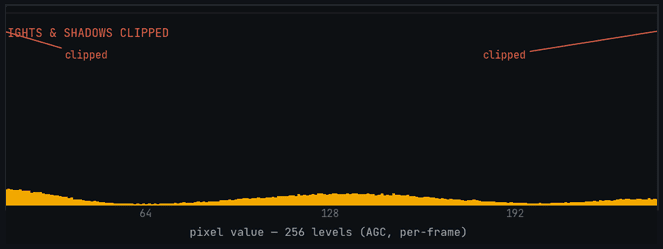
Display Mode (AGC) — 8-bit · 256 levels.
Contrast-stretched for the operator; highlights and shadows are clipped.

Linear NUC — 14-bit · 16,384 levels.
Full dynamic range preserved for AI, analytics and sensor fusion.
SENSOR: PICO640S+ · FRANCE · NDAA-CLEAN · FPGA PROCESSING · HOUSING: ANODISED ALUMINIUM · −35…+55 °C
04 · MODEL ECOSYSTEM
Built to fit your system
KitEye640 comes in two form factors (M — Module, 39.5×41×41 mm · 106 g; S — Scope, 80×44×44 mm · 233 g), with a choice of host interface, and any lens from the 6.3–180 mm ecosystem. One platform logic, one API, one toolchain.

KitEye640S — Scope
80 × 44 × 44 mm · 233 g
A rugged form factor designed for hard-mounted integration, high mechanical loads and recoil-intensive systems. Ideal for RCWS, turrets, anti-aircraft systems and ground robotic platforms.

KitEye640M — Module
39.5 × 41 × 41 mm · 106 g
A compact, SWaP-optimized form factor for UAVs, compact robotic platforms and other systems with strict size and weight constraints.
ONE PLATFORM LOGIC · ONE TOOLSET · ONE INTEGRATION MODEL · SHARED API
MODELS · FORM FACTOR × INTERFACE
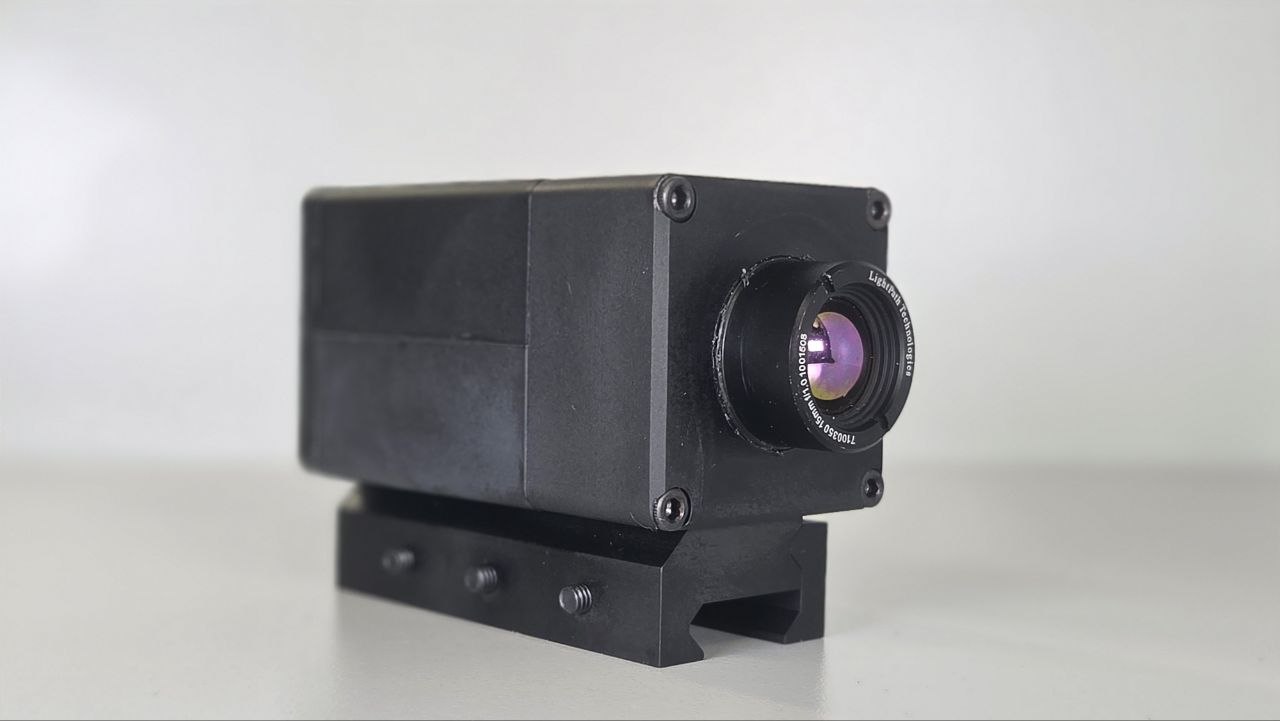
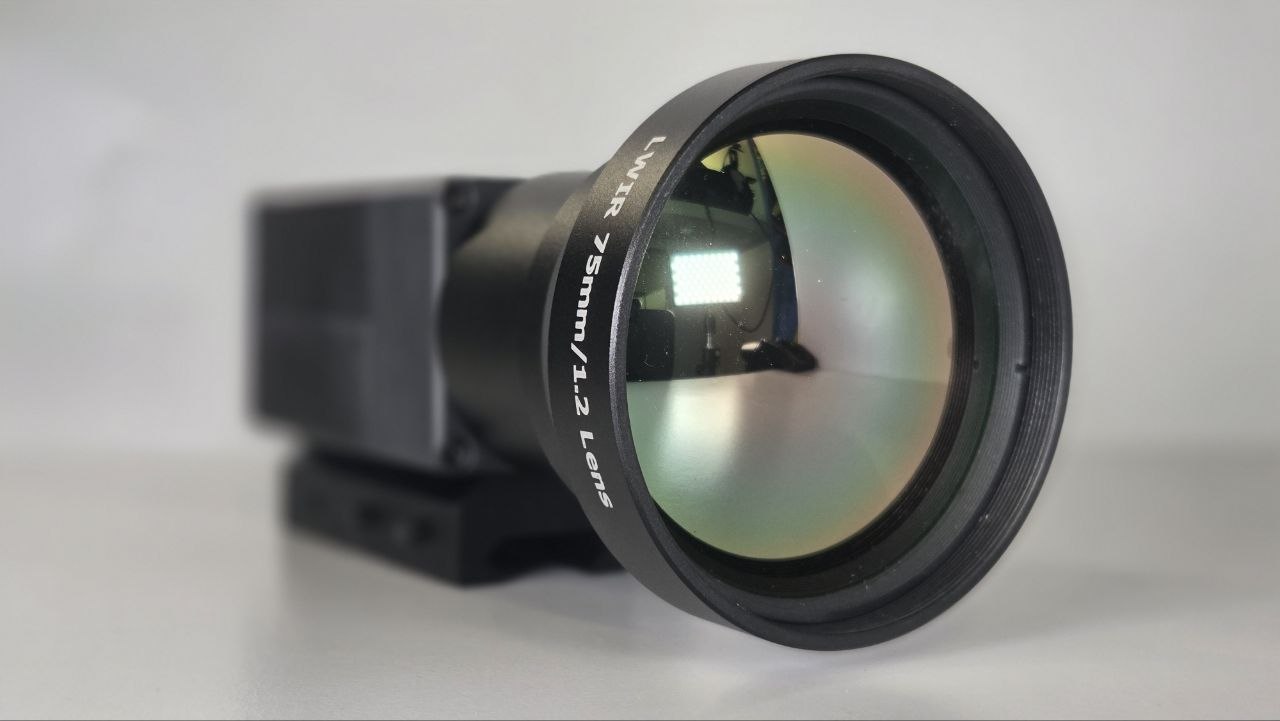
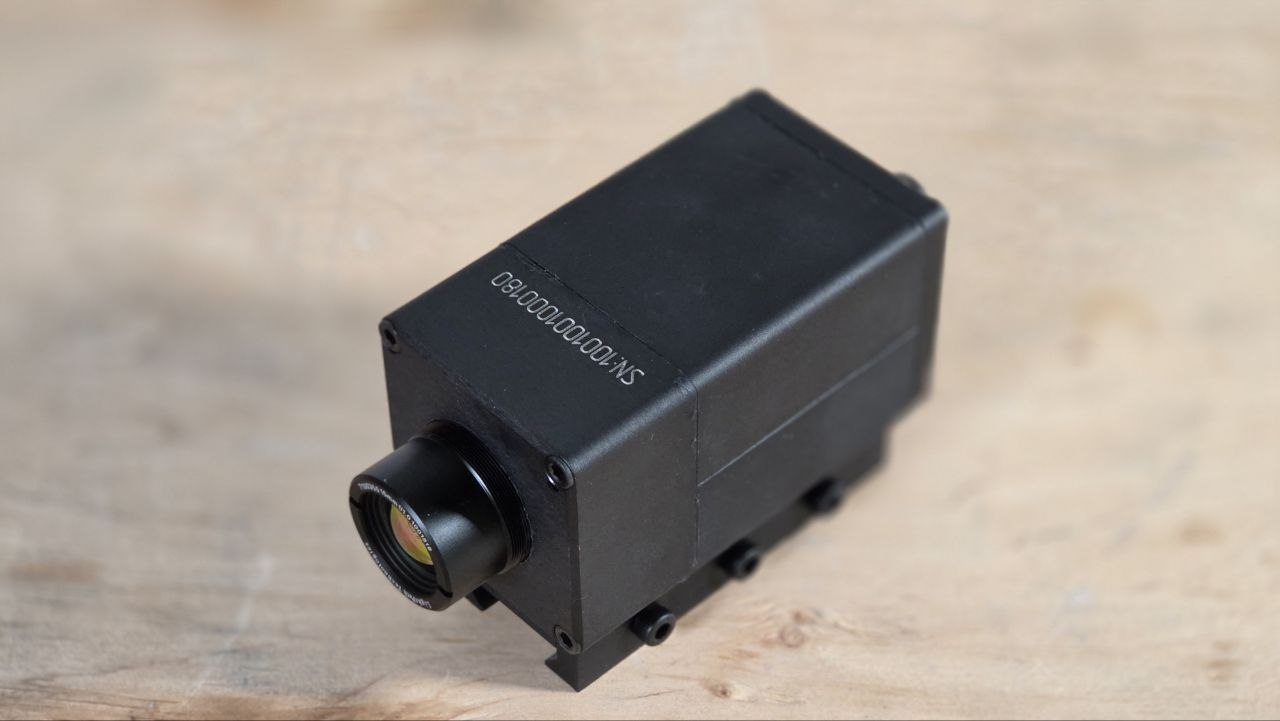
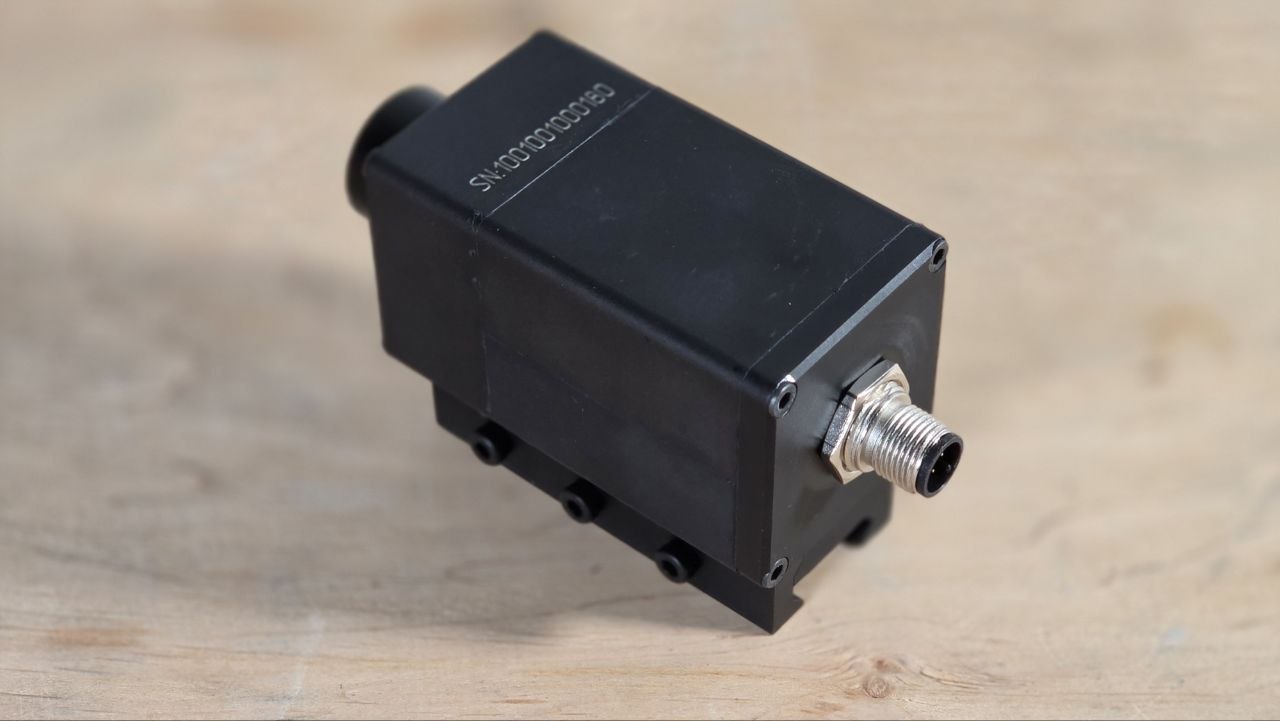
The rugged, recoil-tolerant Scope form factor with USB output — weapon sights, turrets, observation posts; bring-up and companion computers over a standard UVC / V4L2 stack.
05 · GLOSSARY
What each term means
Pick a topic. Each one pairs the specification with the reason it appears on a datasheet — what it changes in the field.
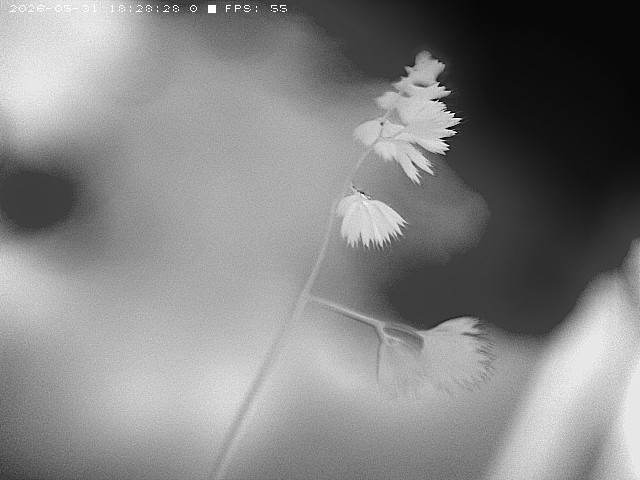
Long-wave infrared radiation
LWIR (Long-Wave Infrared) is the long-wave infrared band. The 8–14 μm designation indicates the wavelengths detected by the thermal imager. People, equipment and surrounding objects emit radiation in this band even in complete darkness, so the camera does not need visible illumination. Fog, rain and dense smoke can reduce image quality and observation range.
06 · LENS ECOSYSTEM
Lens options from 6.3 to 180 mm.

LENS LINEUP · 6–180 MM · 11 FOCAL LENGTHS
6.3 mm
~110°
FPV / ultra-wide navigation
7.3 mm
~86°
FPV / wide-area navigation
9 mm
~62°
FPV / UGV navigation
15 mm
~42°
FPV / UGV wide-area navigation
19 mm
~32°
Area surveillance, light turrets
25 mm
~24°
Heavy bombers, light turrets
35 mm
~17.8°
Optical navigation, mid-range ISR
50 mm
~12.4°
Mid-range targeting, ISR / observation
75 mm
~8.4°
Heavy turrets, AA guns, long-range ISR
100 mm
~6.2°
Long-range observation, target cueing
150 / 180 mm
~4.2° / 3.5°
Specialised long-range observation
SUPPLY CHAIN
Our engineering. A clear supply chain.
Designed and developed in Ukraine.
SOURCED EXTERNALLY · 01
EU sensor — Lynred Pico640S+
French-made uncooled LWIR sensor at the heart of the KitEye640 family.
SOURCED EXTERNALLY · 02
Lens — 6 to 180 mm
EU and China origin options per program requirements and export constraints.

FIELD VALIDATION · UKRAINE
IN-HOUSE DESIGN — CORE OWNED END-TO-END
+
Electronics & PCB design
+
Embedded software
+
Image pipeline & control logic
+
Mechanical & thermal design
+
Components manufacturing — trusted Ukrainian contractors
Developed and refined on real combat experience of the Defence Forces of Ukraine.
GET IN TOUCH
Bring the platform, the working distance and the interface — we reply with configuration options, documentation scope and lead time.
SIGNAL / WHATSAPP

BUILT FOR THOSE WHO SEE FURTHER
ENQUIRY TYPE
Tell us about your platform and the core form factor (Module / Scope), interface and volume you need.